Actual Cash Value
Valuation basis that usually reflects replacement cost less depreciation.
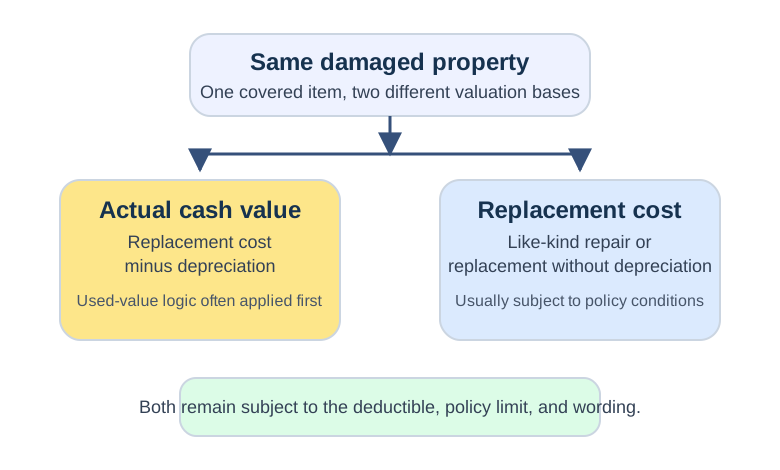
Actual cash value is a valuation method that usually measures damaged property after allowing for depreciation, age, condition, or useful life.
Basic Formula
Here, ACV is actual cash value, RC is the current cost to repair or replace with a comparable item, and Dep is depreciation.
Why It Matters
Many insureds assume the insurer will pay the full cost of buying a new replacement item. Actual cash value explains why the first payment can be lower when the policy or loss settlement wording accounts for depreciation.
How It Works in Canadian Insurance Context
In Canadian property claims, actual cash value is commonly contrasted with replacement cost. The core idea is that a used item is not valued the same way as a brand-new equivalent.
The insurer may look at factors such as:
- age
- condition
- expected useful life
- market or practical replacement context
The exact method depends on the wording. Some policies pay actual cash value unless replacement conditions are later satisfied. Others use actual cash value for specific property types or where replacement cost coverage was not purchased.
How Actual Cash Value Fits Into The Settlement Sequence
| Claim step | Role of actual cash value |
|---|---|
| Loss is adjusted | The insurer determines whether ACV is the governing valuation basis or the initial payment basis |
| Depreciation is applied | Age, condition, and useful life affect the first number |
| Repair or replacement decision is made | The insured learns whether a later replacement cost holdback could still be available |
| Final settlement is calculated | The ACV figure still remains subject to deductible, limit, and category restrictions |
Comparison At A Glance
| Valuation basis | What it usually asks | Usual effect on payment |
|---|---|---|
| Actual cash value | What is the used item worth after depreciation? | Lower initial payment than new replacement cost |
| Replacement cost | What does like-kind repair or replacement cost today? | Higher potential payment, but often with conditions |
| Betterment issue | Is the insured trying to move beyond restoration into improvement? | Can limit what the insurer has to fund |
Practical Example
If a ten-year-old sofa is destroyed in a covered fire, the cost of a brand-new sofa today may be much higher than the actual cash value of the damaged used sofa. The insurer may therefore apply depreciation before calculating the payment.
Where Readers Get Tripped Up
Actual cash value often becomes a surprise in two situations:
- the policyholder assumed all contents were on a full replacement cost basis
- the insured expected the first cheque to equal the price of a new item instead of a depreciated value
Common Misunderstandings
Actual cash value is not automatically the same thing as thrift-store value or forced-sale value. It is a policy and claims valuation concept.
It is also not the same as replacement cost, which generally aims to repair or replace without deducting depreciation, subject to conditions.
Readers also sometimes assume actual cash value is a penalty. It is usually just the valuation basis that applies under that wording unless replacement-cost conditions are later satisfied.
It is also a mistake to treat actual cash value as the same thing as a betterment deduction. ACV usually reflects depreciation and used-value logic, while betterment asks whether the insured is moving beyond restoration into improvement.
Caveat
Valuation wording varies sharply by policy, property type, and endorsement. Some policies require actual repair or replacement before the full replacement-cost basis becomes available.