Deductible
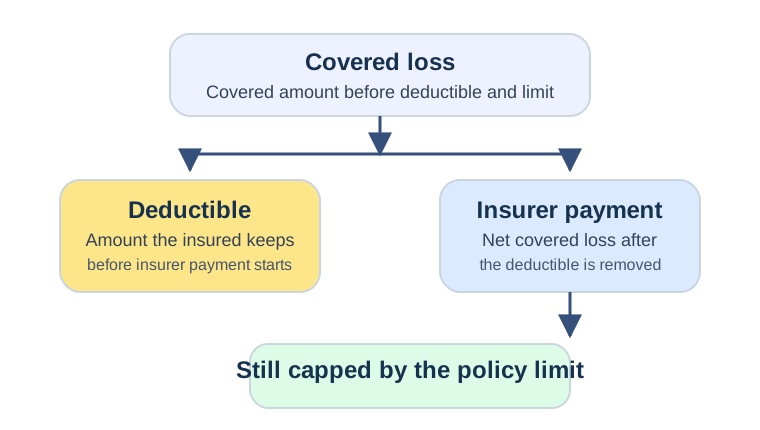
Amount the insured absorbs before the insurer pays the remaining covered loss.
A deductible is the amount of a covered loss the insured absorbs before the insurer pays the remaining covered balance, subject to the policy wording and any applicable limit.
Basic Payment Logic
Here, P is insurer payment, L is covered loss, D is deductible, and Lim is the applicable policy limit.
Why It Matters
The deductible is one of the most visible ways insurance shares cost between the insured and the insurer. It affects premium, claim behaviour, and the net amount recovered after a loss.
How It Works in Canadian Insurance Context
Deductibles may be fixed dollar amounts, percentage deductibles, or special deductibles that apply only to certain kinds of losses. Home and tenant policies often have a base deductible with optional higher deductibles for water-related exposures. Auto policies may treat collision, comprehensive, and direct-compensation property damage deductibles differently depending on the province and product.
Choosing a higher deductible usually lowers premium because the insured is retaining more of the smaller or moderate losses.
Common Deductible Patterns
| Pattern | Where readers often see it | Practical effect |
|---|---|---|
| Fixed dollar deductible | home, tenant, auto, many commercial forms | First layer of covered loss stays with the insured |
| Percentage deductible | some catastrophe, wind, earthquake, or specialty forms | Retained amount rises with the insured value or stated base |
| Coverage-specific deductible | water damage, collision, comprehensive, DCPD, special endorsements | Different causes of loss can have different retained amounts |
Worked Payment Examples
| Covered loss | Deductible | Applicable limit | Insurer payment | What happened |
|---|---|---|---|---|
| CAD 600 | CAD 1,000 | CAD 40,000 | CAD 0 | Loss does not exceed the deductible |
| CAD 6,500 | CAD 1,000 | CAD 40,000 | CAD 5,500 | Deductible reduces the payment, but the limit does not bind |
| CAD 55,000 | CAD 1,000 | CAD 40,000 | CAD 40,000 | Net covered loss exceeds the limit, so the limit caps payment |
If a tenant insurance claim for stolen contents is covered for CAD 6,500 and the deductible is CAD 1,000, the insured normally absorbs the first CAD 1,000 and the insurer pays the remaining CAD 5,500, subject to any other policy limits or wording restrictions.
How It Differs From Nearby Terms
| Term | What it does | Key contrast with a deductible |
|---|---|---|
| Policy Limit | Caps the top end of the insurer’s payment | Limit restricts maximum payment; deductible absorbs the first layer |
| Coinsurance | Can reduce payment if the property was underinsured | Coinsurance tests adequacy of insurance carried before the loss |
| Self-Insured Retention | Retained layer the insured may have to fund before insurer duties attach | SIR can affect defence and claims handling, not just the arithmetic of payment |
Common Misunderstandings
A deductible does not mean the loss is uncovered. It assumes coverage exists and then allocates part of the covered loss to the insured.
It is also wrong to assume a higher deductible is always a better bargain because the premium is lower. A higher deductible can materially change the insured’s out-of-pocket exposure on frequent or moderate losses.
Readers also sometimes assume deductibles behave identically across provinces and product lines. In practice, auto, property, liability, and benefits products can treat deductibles very differently.
Caveat
Deductible rules vary by line of business, cause of loss, and endorsement. Some losses have no deductible, some have separate deductibles, and some policies let the insured choose from several retained amounts.