Combined Ratio
Underwriting measure that adds losses and expenses against earned premium.
Combined ratio is a core underwriting measure showing how much earned premium is consumed by incurred losses and underwriting expenses before investment income is considered.
Formula
Here, CR is combined ratio, L is incurred losses, E is underwriting expenses, and EP is earned premium.
It is also commonly expressed as:
LR means loss ratio and ER means expense ratio.
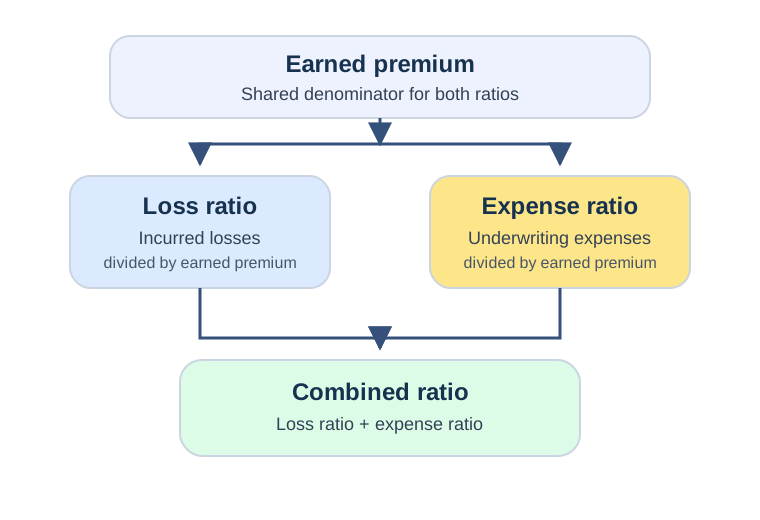
The diagram shows the usual logic: losses and expenses both draw against the same earned-premium base, and the two ratios add up to the combined ratio.
Why It Matters
Combined ratio is one of the quickest ways to explain why a line of business may be under pressure even when readers hear that claims are only part of the story. A book can have a manageable loss ratio and still perform poorly once commissions, administration, and claims-handling expense are added.
Because it strips out investment income, the ratio is especially useful when Canadian insurers, actuaries, and brokers are discussing underwriting discipline, repricing, catastrophe impact, reinsurance cost, or whether a portfolio is earning its keep on operations alone.
How Canadian Insurers Use It
In Canadian market commentary, combined ratio often appears in quarterly insurer results, rate-change discussions, and internal portfolio reviews. It helps answer questions such as:
- Is this auto or property book profitable on underwriting alone?
- Are rising claims or rising expenses doing more damage?
- Did catastrophe losses distort the year?
- Is reinsurance cost or distribution cost eroding the margin?
The ratio is useful precisely because it forces readers to look beyond premium volume. A large book of business can still be weak if too much of its earned premium is being consumed by claims and operating costs.
Reading the Number
| Combined ratio | Usual reading |
|---|---|
| Below 100% | Underwriting profit before investment income |
| Around 100% | Rough underwriting break-even |
| Above 100% | Underwriting loss before investment income |
That reading is directional, not absolute. A 98% combined ratio is usually better than a 104% combined ratio, but a catastrophe year, reserve strengthening, or one-time expense shift can change the story behind the number.
Worked Example
| Scenario | Loss ratio | Expense ratio | Combined ratio | What it suggests |
|---|---|---|---|---|
| Disciplined property book | 61% | 28% | 89% | Underwriting profit before investment income |
| Water-damage pressure year | 74% | 30% | 104% | Claims and expenses are outrunning earned premium |
| Efficient but cat-hit book | 83% | 17% | 100% | Expenses are contained, but claims still absorb the margin |
If a commercial-property portfolio posts a 74% loss ratio and a 30% expense ratio, the combined ratio is 104%. That does not mean the insurer is insolvent or doomed, but it does mean the underwriting result for that book is negative before investment income is considered.
Common Misunderstandings
Combined ratio is not the same as loss ratio. Loss ratio focuses on claims cost. Combined ratio brings claims and expenses together.
It is also not the whole financial story. Investment income, capital strength, reserve quality, and reinsurance structure still matter.
Readers also sometimes assume a combined ratio just below 100 means every segment inside the insurer is healthy. In practice, one strong book can offset another weak one, so the headline figure is only a starting point.
Caveat
The exact components can vary by reporting basis, reinsurance treatment, and whether reserve development or catastrophe losses were unusual in the period. Combined ratio is a powerful summary measure, but it should be read with context rather than treated as a self-executing verdict.